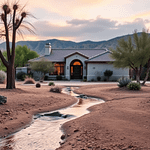
Arizona’s monsoon season officially runs from mid-June through September, and Phoenix homeowners know what it brings: dust storms, sudden downpours, and street flooding that can come and go within an hour. Hard, dry desert soil doesn’t absorb heavy rain quickly, so water runs off fast and can find its way into garages, under doors, and through roofs. This guide covers how to prepare before a storm and how to clean up safely if water gets inside.
Part 1: Preventing Monsoon Flood Damage
Check Your Roof Before the Season
Many Phoenix homes have flat or low-slope roofs with scuppers and canales that drain water off the edge. When those get clogged with leaves, dust or debris, water pools on the roof and can find gaps in the roofing. Before monsoon season:
- Clear scuppers, gutters and downspouts.
- Look for cracked or lifted roofing, damaged flashing around vents and AC units, and worn roof coating.
- Have a roofer repair problems before the first storm, not after.
Manage Water Around the Foundation
- Make sure the soil and landscaping slope away from the house.
- Keep yard drains and patio drains clear of gravel and debris.
- Point downspouts away from the foundation.
- If your lot sits low or your property is in a wash area, consider asking a contractor about grading or drainage improvements.
Protect Doors, Garages and Windows
- Replace worn weatherstripping and door sweeps.
- Keep a few sandbags or water barriers on hand for doors that face the direction of runoff. Some Valley cities offer free sandbags during the season, so check your city’s website.
- Store garage items on shelves or pallets instead of directly on the floor.
- Check window seals and caulking for gaps.
Review Your Insurance
Standard homeowners policies often treat flood water from outside differently from water damage caused by something like a burst pipe. Ask your agent what your policy covers for storm-driven water and whether separate flood coverage makes sense for your property.
Part 2: During the Storm
- Stay off flooded roads. Arizona’s “Stupid Motorist Law” exists for a reason. Water over a road can be deeper and faster than it looks.
- If water starts coming in, move valuables and electronics to higher ground.
- If water is near outlets or the electrical panel and you can’t reach the breaker safely, leave the area.
- Don’t go on the roof during the storm.
Part 3: Cleanup After Monsoon Flooding
Step 1: Safety First
Outdoor floodwater picks up dirt, debris, fertilizer, oil and sometimes sewage. Treat it as contaminated. Wear rubber boots and gloves, keep children and pets away, and turn off power to wet areas if you can do so safely.
Step 2: Document the Damage
Photograph and video the water line on walls, standing water, damaged flooring, furniture and belongings before you move anything. Your insurer will probably ask for it.
Step 3: Remove Water Quickly
Small amounts of water on hard floors can be handled with a wet/dry vacuum and mops. Larger amounts, or water that soaked into carpet, drywall or cabinets, need professional extraction. Water that sits in wall cavities and under flooring creates conditions for mold, even in Phoenix’s dry climate.
Step 4: Remove and Dry
Because storm runoff is contaminated, porous materials that it touched often need to come out: carpet pad, the lower section of drywall, and insulation. Hard surfaces need cleaning and disinfecting. After that, air movers and dehumidifiers dry the structure, and moisture readings confirm when it’s actually dry, not just dry to the touch.
Step 5: Watch for Mold
A musty smell, discoloration on walls or baseboards, or new allergy-type symptoms in the weeks after a storm can be signs of hidden moisture. Have it checked rather than covering it up.
Step 6: Fix the Cause
Once the house is dry, fix whatever let the water in, whether that’s the roof, grading, a door seal or a drain, so the next storm doesn’t repeat the damage.
When to Call a Professional
Call a restoration company if water got past the baseboards, soaked carpet or drywall, came in through the roof into the ceiling, or is from outdoor runoff or sewage. Aqua Dry provides 24/7 water damage restoration in Phoenix, including flood cleanup, extraction, structural drying and mold remediation.
Frequently Asked Questions
When is monsoon season in Phoenix?
The official season runs from June 15 through September 30. The heaviest storms usually come in July and August.
Is monsoon floodwater dangerous to clean up myself?
Outdoor floodwater can carry contaminants, so treat it as unsafe. Wear protective gear, and call a professional if water reached walls, carpet or anything porous.
Can mold grow after flooding even in a dry climate?
Yes. The outdoor air is dry, but the inside of walls, carpet pad and cabinet bases can stay wet long enough for mold to grow if they aren’t dried properly.
Does insurance cover monsoon flood damage?
It depends on your policy and how the water got in. Roof leaks during storms and outdoor flooding are often treated differently. Ask your insurer for details.
What areas do you serve?
Phoenix, Scottsdale, Mesa, Tempe, Chandler, Gilbert, Glendale, Peoria and Paradise Valley.
Storm Damage? We’re Available 24/7
If monsoon water got into your Phoenix home or business, call Aqua Dry Restoration at (602) 923-1619, any time, day or night, or email [email protected].